Spend $675 to unlock your gift!
$0
$90
Free Shipping
$675
Baking Sheet Duo
($120 Value)
Your Cart is Empty
Get started with the Caraway essentials!
Free Shipping On Orders $90+
Free Returns
30-Day Trial
Home & Kitchen with Caraway

Key Takeaways
Ceramic cookware is made without PTFE, PFOA, lead, or cadmium, but the nonstick coating typically maintains peak performance for just one to three years.
The biggest wins are even heating, easy cleanup, and cooking with less oil; the biggest tradeoffs are heat sensitivity and a shorter coating lifespan than PTFE.
Compared to stainless steel, cast iron, and PTFE nonstick, ceramic sits in the middle: less durable, but free of synthetic coatings.
Ceramic cookware uses a mineral-based coating over an aluminum or stainless steel core, made without PTFE, PFOA, lead, or cadmium. The honest verdict: it heats evenly and cleans up fast, but the coating typically holds peak performance for one to three years, versus
five to seven years for a quality PTFE coating .
That tradeoff is really the whole story here. Below: the real pros and cons, how ceramic stacks up against other cookware materials, and the questions people ask most before buying.
Everyone's kitchen is unique. You may have chosen a white subway tile for your backsplash, while your neighbor chose a moody slate shade. Maybe you went back and forth on the countertop material, favoring white quartz over a dark green granite.
When designing the center of your home (the kitchen), it seems like there is an endless array of options. When purchasing cookware, you also have quite a few options from a wide range of materials.
These cookware materials include, but are not limited to, stainless steel, cast iron, ceramic, and more.
Let's talk about ceramic. Ceramics are everywhere in our lives: from collectible figurines to spark plugs in race cars. Most notably, ceramics can be made into non-toxic cookware.
Non-stick cookware is a common fixture in any kitchen. However, some cookware obtains its non-stick properties through the use of chemicals like polytetrafluoroethylene (PTFE) and per-and polyfluoroalkyl substances (PFAS) . These chemicals, like Teflon, can be toxic.
Not only is ceramic cookware free of these chemicals, but it also makes cooking and cleaning easier than ever before.
Ceramic-coated pans distribute heat evenly across the cooking surface, which means no scorched spots or half-cooked centers. Whether you're simmering a sauce, searing vegetables, or cooking a delicate fillet of fish, the heat stays consistent from edge to edge. That evenness is largely thanks to the aluminum or stainless steel core underneath the coating doing the real conductive work.
Cleanup is one of ceramic's biggest selling points. Most pans just need a wipe-down with warm water, soap, and a soft sponge. Because the coating naturally resists food buildup, there's rarely any stubborn scrubbing involved, which is a real win on a weeknight when dishes are the last thing you want to think about.
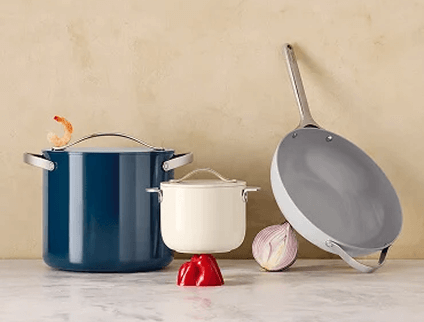
Ceramic cookware comes in a range of colors and finishes, which is part of why it's become such a kitchen staple. Our
Cookware Set spans shades like Cream, Navy, Sage, and Perracotta, so it's easy to find something that fits your space. It also looks good enough to go straight from stovetop to table, which cuts down on dishes too.
Ceramic coatings are made from mineral-based materials, not the PTFE or PFOA found in traditional nonstick. Our ceramic cookware is third-party tested and free of PTFE, PFOA, lead, and cadmium.
Compared with other cookware materials, ceramic offers a non-toxic nonstick surface free of the
PFAS-family chemicals historically associated with Teflon-style coatings. It's also non-reactive, so acidic ingredients like tomatoes or citrus won't pick up a metallic taste.
Our ceramic cookware is oven-safe up to 550°F and works on every stovetop, including induction, gas, and electric. That range covers searing on the stove and finishing in the oven without switching pans, so you're not locked into one type of cooktop if you move or renovate down the line.
Because the ceramic surface releases food so easily, you can cook with noticeably less oil or butter than you'd need on stainless steel or cast iron. A thin coat is usually all it takes for eggs, fish, or vegetables to glide right off, which is a nice bonus if you're trying to cut back on added fats without losing flavor or texture.
Ceramic coatings typically hold peak nonstick performance for one to three years, while
a quality PTFE coating with proper care can last five to seven years . The tradeoff is what you're avoiding: PTFE relies on synthetic fluoropolymer chemistry, while ceramic doesn't.
If a shorter window on peak performance bothers you, a well-built aluminum or stainless steel core underneath the coating genuinely extends how long the surface holds up.
Ceramic coatings start to degrade with prolonged exposure to high heat, generally above 500°F. That's rarely an issue for everyday cooking, since most stovetop recipes never get close to that range, but it does rule out extreme high-heat techniques like blackening or extended broiling.
Our ceramic cookware is built to handle standard stovetop and oven use comfortably; just stick to low or medium heat, and you'll never come close to that ceiling.
Metal utensils will scratch and eventually chip a ceramic coating, so they're off the table entirely. Silicone, wood, or nylon are the only safe choices.
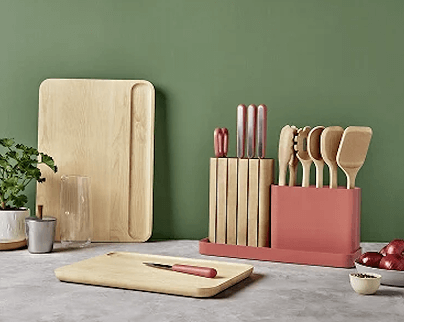
This is a small adjustment if you're used to metal tools, but it's worth keeping a dedicated set on hand so you're never tempted to reach for a metal spatula out of habit. Our birch wood
Utensil Set is built specifically to pair with ceramic surfaces.
Dishwasher detergents are harsher than hand soap and can gradually degrade a nonstick coating over repeated cycles . Most manufacturers, us included, recommend hand washing with warm water and a soft sponge instead. It takes barely longer than loading a dishwasher, and it's one of the simplest ways to protect your investment.
Like every nonstick surface, ceramic's release properties weaken gradually with regular cooking. Food that once slid off effortlessly may start needing a little more oil or a lower flame over time. Using gentle heat and the right utensils from day one is the best way to slow that decline and stretch out the coating's peak years.
A quality ceramic pan typically costs more than a basic PTFE nonstick pan at the low end of the market. That price difference reflects the coating technology and testing that goes into a well-made ceramic surface.
Weighed against cheaper alternatives, the cost evens out over time since you're avoiding the chemical tradeoffs of synthetic coatings, even if the sticker price is higher on day one.
Ceramic isn't the pan to reach for if you want a hard, restaurant-style sear on a steak. Stainless steel and cast iron both handle higher sustained heat and develop better browning through the Maillard reaction. Ceramic is built for everyday, lower-heat cooking rather than high-heat searing, so it's worth keeping a stainless or cast iron piece in rotation for that specific job.
Ceramic is just one piece of the cookware puzzle. Here's how it stacks up against the other materials you'll see most often, so you can see where the real tradeoffs land instead of guessing from marketing copy.
Ceramic-Coated
Heat tolerance: best under 500°F
Average lifespan: 1–3 years (coating)
Dishwasher safe: not recommended
Induction compatible: yes
Price range: mid-range
PTFE Nonstick
Heat tolerance: best under 500°F
Average lifespan: 3–7 years (coating)
Dishwasher safe: not recommended
Induction compatible: varies by base
Price range: budget to mid-range
Stainless Steel
Heat tolerance: 500°F and above
Average lifespan: decades
Dishwasher safe: yes, hand washing extends life
Induction compatible: yes (5-ply and similar)
Price range: mid-range to premium
Cast Iron
Heat tolerance: very high
Average lifespan: generations, with care
Dishwasher safe: no
Induction compatible: yes
Price range: mid-range
Carbon Steel
Heat tolerance: very high
Average lifespan: decades, with seasoning
Dishwasher safe: no
Induction compatible: yes
Price range: budget to mid-range
No single material wins on every metric. Ceramic trades some longevity for a coating built without PFAS, PTFE, or PFOA, while stainless steel and cast iron trade convenience for decades of use.
Ceramics have been around a lot longer than our modern kitchens. Over time, ceramics have changed and grown with us, becoming an integral part of life's essentials, here in our kitchens and even in outer space.
Every item in our
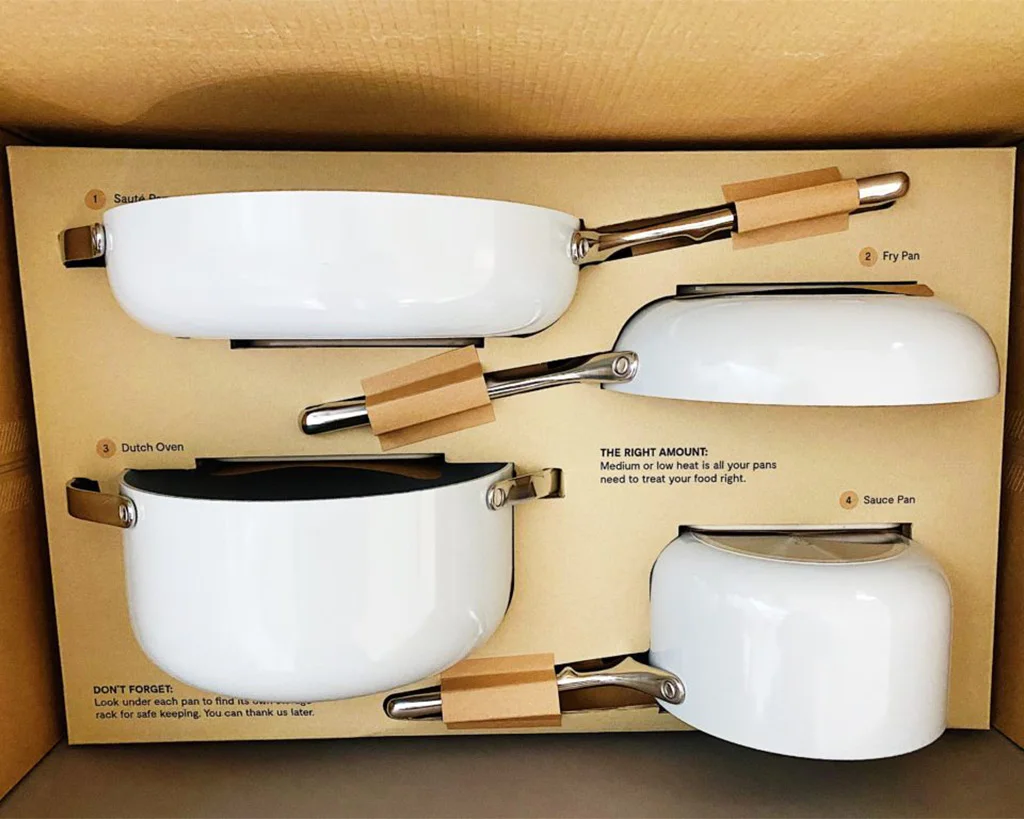
Cookware Set is extremely versatile. We've whittled down all those items that you could need into four kitchen essentials: a Sauté Pan, a Sauce Pan, a Fry Pan, and a Dutch Oven, everything you need and nothing you don't.
These few products can handle a wide range of cooking tasks and are also incredibly easy to clean. You're probably no stranger to the dreaded scraping of dishes at the end of the day.
This overuse of elbow grease damages the non-stick surface. With the best ceramic cookware, just a bit of soap, water, and gentle scrubbing, food falls off quickly and easily: no hassle at all.
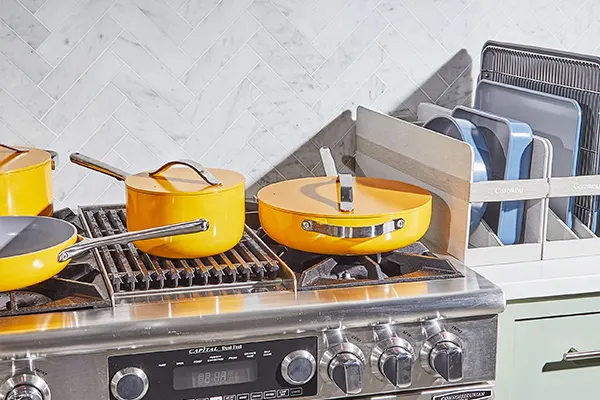
Kitchens have the capacity to get a little crowded; not only does the whole family congregate there, but the pots, pans, and cooking supplies you need certainly take up space. That's where our minimalist style comes in through our
Cookware Set 's free storage unit. The Magnetic Pan Rack and Canvas Lid Holder ensures easy and convenient storage, so you never have to worry about a cluttered space.
As an added bonus, our cookware comes in a variety of vibrant colors that you won't find anywhere else. You spent so much time designing the perfect kitchen; your cookware should elevate your design choices.
With beautiful options such as Cream, Navy, Sage, Perracotta, Gray, and Marigold, you can create a beautiful and intentional style and look for your kitchen that's sure to have people turning heads.
Yes. Quality ceramic cookware is made from mineral-based materials and manufactured without PTFE, PFOA, lead, or cadmium. The
FDA regulates which substances are authorized for food contact use , and ceramic coatings don't rely on the fluoropolymer chemistry used in traditional Teflon-style nonstick. Look for cookware that's third-party tested, since that verification matters more than the word "ceramic" on its own.
The pan itself, meaning the metal core underneath the coating, can last for years with basic care. The ceramic coating delivers peak nonstick performance for about one to three years, depending on how often you cook and how well you treat it. Low heat, gentle utensils, and hand washing all help stretch that window further.
The biggest trade-offs are a shorter coating lifespan than PTFE, sensitivity to high heat above roughly 500°F, and a requirement for non-metal utensils and handwashing. It also isn't the best choice for hard searing, since stainless steel and cast iron both handle higher sustained heat more reliably and develop deeper browning.
It depends what you mean by nonstick. Ceramic is a type of nonstick cookware that is built on mineral chemistry instead of PTFE. Compared to traditional PTFE nonstick, ceramic avoids synthetic fluoropolymer coatings but generally has a shorter peak-performance window. Neither is objectively "better." They're solving the same problem with different materials and different trade-offs, so the right choice depends on what matters most to you.
Quality ceramic cookware is made without lead, cadmium, PFAS, PTFE, or PFOA. That said, quality varies by brand, so it's worth checking for third-party testing rather than relying on labels alone. If a brand won't share its testing results, that's worth asking about before you buy.
Ceramic cookware offers a unique blend of non-toxic, non-stick cooking with an attractive appearance, making it a valuable addition to any kitchen. While it does require some extra care and attention, the benefits often outweigh the drawbacks.
Its ability to cook food evenly, retain original flavors, and enable lower-fat cooking makes it a popular choice among health-conscious and style-savvy cooks alike. Ultimately, the decision comes down to personal preference and cooking style.
If you value aesthetically pleasing, easy-to-clean, health-conscious cookware, ceramic could be a perfect fit. Our
Cookware Set gives you incredible quality, unmatched style, and a variety of colorways to choose from. Third-party tested, built for everyday cooking, and ready to ship straight to your kitchen.
Sources:
How Often Should I Replace My Nonstick Pan? | America's Test Kitchen
Authorized Uses of PFAS in Food Contact Applications | FDA
“Forever Chemicals” Called PFAS Show Up in Your Food, Clothes, and Home | NRDC
Spend $675 to unlock your gift!
$90
Free Shipping
$675
Baking Sheet Duo
($120 Value)
Get started with the Caraway essentials!
Free Shipping On Orders $90+
Free Returns
30-Day Trial
Spend $675+ to unlock your free gift!
Exclusive Baking Sheet Duo for orders $675+
$90
Free Shipping
$675
Baking Sheet Duo
($120 Value)
Spend $675+ to unlock your free gift!
Exclusive Baking Sheet Duo for orders $675+
$90
Free Shipping
$675
Baking Sheet Duo
($120 Value)
