Spend $675 to unlock your gift!
$0
$90
Free Shipping
$675
Baking Sheet Duo
($120 Value)
Your Cart is Empty
Get started with the Caraway essentials!
Free Shipping On Orders $90+
Free Returns
30-Day Trial
Home & Kitchen with Caraway
Key Takeaways
Ceramic heats up quickly and cooks evenly at low to medium heat, while cast iron heats up slowly but retains heat longer, making it better for searing.
Ceramic coatings typically maintain peak nonstick performance for one to three years; a well-seasoned cast-iron pan can last for generations.
Neither material is objectively better. Ceramic suits everyday, low-maintenance cooking, while cast iron suits high-heat searing and cooks who don't mind a little upkeep.
Ceramic vs. cast iron is one of the most common cookware debates home cooks run into, and for good reason: both are genuinely great, just built for different jobs. At
Caraway , we care about making cooking easier, cleaner, and healthier from the ground up, which is exactly why we're breaking down this ceramic vs. cast iron comparison honestly, without picking a side.
The short version: it depends on how you cook. Here's how the two materials stack up across the things that actually matter: heat, health, weight, lifespan, and price, starting with the fast version before we get into the details.
| Ceramic | Cast Iron | |
| Heat Retention | Moderate | Excellent |
| Heat-Up Speed | Fast | Slow |
| Weight (10" Pan) | ~2 lbs | ~5–6 lbs |
| Non-Toxic Surface | Yes, free of PFAS, PTFE, lead, and cadmium | Yes, naturally inert once seasoned |
| Seasoning Required | No | Yes, ongoing |
| Max Safe Temp | Up to 550°F | 500°F and above |
| Oven Safe | Yes | Yes |
| Dishwasher Safe | Not recommended | No |
| Average Lifespan | 1–3 years (coating) | Generations, with care |
| Best For | Eggs, delicate proteins, acidic sauces, everyday low-to-medium heat cooking | Searing, high-heat cooking, oven-to-stovetop dishes |
Ceramic cookware is a metal pan, usually aluminum, coated in a mineral-based, non-toxic layer. Cast iron is a single solid piece of cast metal that develops its nonstick surface through seasoning. Ceramic is lightweight and low-maintenance; cast iron is heavy, traditional, and built to last for generations with proper care.
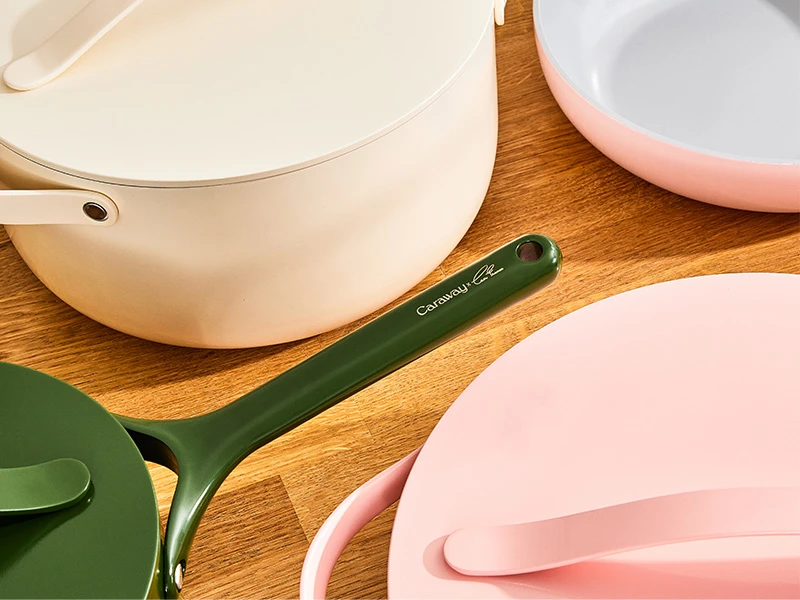
Ceramic cookware is made with a metal base (usually aluminum) that's coated with a layer of ceramic (a naturally slick, non-toxic material that facilitates easy cooking and cleanup).
Our ceramic coating is free of PFAS, PFOA, lead, and cadmium , so you can cook with confidence knowing no harmful chemicals are leaching into your meals.
Cast-iron cookware is made by
pouring molten iron into molds , creating thick, heavy pans known for exceptional heat retention. Once seasoned with oil, cast iron develops a natural non-stick surface that improves over time. It's been a kitchen staple for generations and still shines when it comes to slow-cooked dishes and oven bakes.
Both are considered non-toxic when used properly. Ceramic coatings are made without PFAS, PTFE, lead, or cadmium. Uncoated cast iron has no synthetic coating at all, and can even add small amounts of dietary iron to food. Neither poses a health risk when used as intended.
Ceramic cookware is ideal for
health-conscious cooks who want to avoid traditional non-stick chemicals. The mineral-based surface means no PFAS, PTFE (like Teflon), or other toxins, just a naturally slick layer that helps food release easily with minimal oil or butter.
Ceramic heats up fast and distributes heat evenly across the surface, which is great for eggs and delicate foods. Cast iron heats up slowly but holds onto heat far longer, making it the better choice for searing and high-heat cooking that needs steady, sustained temperature.
Ceramic-coated cookware heats evenly across the pan's surface, helping you avoid hot spots that lead to uneven cooking. Whether you're making pancakes or sautéing veggies, everything cooks at a consistent temperature for better results and fewer burnt edges.
With the right seasoning, cast iron develops a smooth, naturally non-stick surface that improves over time. Each use helps build up that layer, making it even easier to cook without sticking or excess oil.
Cast iron's heat retention comes down to physics. A
university thermodynamics study using infrared thermography found that cast iron's combination of low thermal conductivity, high heat capacity, and high emissivity makes it thermally superior for cooking, since heat stays concentrated near the food instead of dissipating.
That's what makes it so good at searing: once the pan is hot, dropping in a cold steak barely drops the surface temperature, producing a deep, even crust through the Maillard reaction.
Cast iron also moves seamlessly from stovetop to oven, typically handling 500°F or higher without issue, which makes it ideal for dishes that start with a sear and finish roasting. Cooking acidic, moisture-rich foods in cast iron can also
add small amounts of dietary iron to your meal, which some people view as a nutritional plus. With proper care, a cast iron pan can realistically last for generations.
No. Ceramic coatings typically deliver peak nonstick performance for one to three years, while a well-seasoned cast iron pan can last for generations with basic care. Cast iron's durability is one of its biggest advantages, though it comes with a heavier, higher-maintenance tradeoff.
While the ceramic coating performs beautifully, it can wear down over time with heavy use. To make it last, stick to low or medium heat, avoid metal utensils, and hand-wash gently instead of tossing it in the dishwasher.
Ceramic coatings are smooth but sensitive. Rough handling or stacking can cause scratches or chips. The good news? A little care goes a long way, and proper storage keeps your pans looking and performing like new.
Cast iron's biggest downside is simply its weight. A 10-inch cast iron skillet typically weighs 5 to 6 pounds, compared to roughly 2 pounds for a similarly sized ceramic pan, which matters if you're lifting it in and out of the oven regularly or have any wrist or grip limitations.
It also heats up slowly, so it's not the pan to reach for when you're in a rush. Acidic foods like tomato sauce, wine, and citrus can strip the seasoning layer over time, and cast iron needs regular maintenance: hand washing only, a light coat of oil after every use, and thorough drying to prevent rust if it's ever stored damp.
Not for extended periods. Ceramic coatings start to degrade above roughly 500°F to 550°F, so they're best suited for low to medium heat. Cast iron, by contrast, thrives at high heat and is the better choice for hard searing or broiling.
Ceramic performs best at low to medium heat, day to day. High heat accelerates coating breakdown and shortens the lifespan of your pan's nonstick coating, so it's best reserved for everyday cooking rather than searing or blackening. If you regularly cook at high heat, cast iron will hold up better over the long run.
Ceramic cookware tends to cost more upfront for a comparable quality tier, largely because of the coating technology and testing involved. A quality ceramic fry pan typically runs $100 to $150, with full sets ranging from $300 to $600, depending on the number of pieces.
Cast iron is usually the more budget-friendly entry point. A basic 10-inch cast iron skillet can be found for $20 to $40, and even premium, pre-seasoned versions rarely exceed $100. Enameled cast iron changes that math considerably, with a single enameled Dutch oven often costing $200 to $400 or more, putting it closer to a full ceramic set.
The real comparison isn't just the sticker price, though. Cast iron's decades-long lifespan means the cost-per-year drops dramatically the longer you own it. Ceramic's shorter coating lifespan means you're likely replacing pans more often, even if the individual purchase feels more reasonable.
If you're budgeting for a lifetime of cooking rather than a single purchase, cast iron tends to win on pure economics. If lower-maintenance cooking matters more to you than long-term cost, ceramic's upfront price is still very manageable.
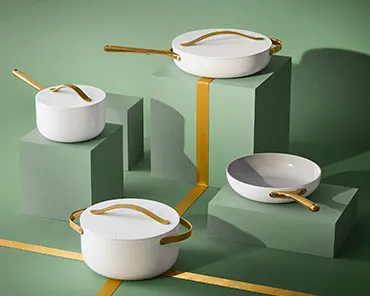
This is one of the most common points of confusion in cookware shopping. Enameled cast iron, the Le Creuset and Staub style pieces you've probably seen, isn't ceramic at all. It's a solid cast-iron core with a porcelain-enamel coating fused to the surface at high heat. True ceramic cookware, like ours, is a lightweight aluminum core coated in a mineral-based, non-toxic layer.
The practical differences are significant. Enameled cast iron retains the weight and heat-retention properties of regular cast iron, so a Dutch oven in this style can weigh 10 pounds or more. It's also non-reactive, which makes it excellent for acidic, long-simmered dishes like braises and tomato-based sauces, similar to ceramic in that regard.
Ceramic-coated cookware is dramatically lighter, heats up faster, and costs less, but doesn't hold heat nearly as long once it's off the burner.
If you want the non-reactive, oven-to-table versatility of enameled cast iron without ceramic's shorter coating lifespan, our
Enameled Cast Iron Dutch Oven pairs the heat retention of traditional cast iron with a coating that never needs seasoning.
Delicate foods like eggs and pancakes need a genuinely nonstick surface and gentle, even heat, which is exactly where ceramic shines. Cast iron can cook eggs beautifully once it's well-seasoned, but it takes patience, and the wrong technique can turn scrambled eggs into a scraping project. If breakfast is a daily ritual in your house, ceramic is the lower-effort, more consistent choice.
When you want a deep, restaurant-style crust, cast iron is the clear winner. Its high heat capacity means the pan barely loses temperature when a cold steak hits the surface, which is exactly what triggers strong Maillard browning. Ceramic can sear reasonably well, but its coating isn't designed for the sustained high heat needed to produce that signature crust.
Tomato sauce, wine reductions, and citrus-based marinades are non-reactive on ceramic from the very first use. Uncoated cast iron reacts with acidic ingredients, which can strip the seasoning and leave a metallic aftertaste, especially during long simmer times. If your weekly rotation includes a lot of tomato-based cooking, ceramic is the safer bet for both your pan and your sauce.
For daily cooking, the deciding factor usually comes down to weight tolerance and how much maintenance you're willing to take on. Ceramic is lightweight, requires no seasoning, and is ready to go straight out of the box. Cast iron demands more upkeep and muscle, but rewards you with a pan that improves with age and can genuinely last a lifetime.
Both materials work for griddle-style cooking, but ceramic is generally easier for everyday use. It heats up faster, requires less oil, and cleans up in seconds, which matters when you're making a big batch of pancakes or a family breakfast spread. Cast iron griddles hold heat beautifully for large-batch cooking but take longer to preheat evenly across the surface.
Cast iron is the better choice for high-heat, oven-finished dishes like cornbread, deep-dish pizza, or a seared roast that finishes cooking in the oven. Ceramic is oven-safe too, up to 550°F for ours, but it's better suited to more delicate bakes where you don't need that intense, sustained heat.
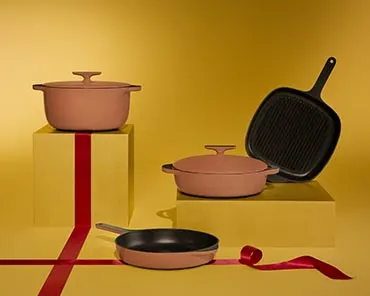
There's no universal winner here. Ceramic suits everyday, low-maintenance cooking and health-conscious kitchens. Cast iron suits high-heat searing, oven-finished dishes, and cooks who don't mind a little upkeep. Many people end up owning both and reaching for whichever fits the meal.
If you want cookware that's clean, easy to use, and low-maintenance, ceramic is your everyday hero. It's lightweight, non-toxic, and perfect for modern home cooks who value both performance and health.
Cast iron, on the other hand, is made for those who love tradition, don't mind a little upkeep, and enjoy the kind of cooking that takes time and care.
Here's the decision tree version:
Pick ceramic if you cook eggs daily, want low-maintenance cookware, cook a lot of acidic foods, or share kitchen duties with someone who finds heavy pans difficult to lift.
Pick cast iron if you sear regularly, bake cornbread or skillet dishes, want a pan that could genuinely outlive you, or like the idea of a little extra dietary iron from your cooking.
Honestly, many home cooks end up with both because the materials complement each other. Ceramic handles the fast, everyday stuff. Cast iron handles the slow, high-heat stuff.
No matter what you choose, clean cooking always starts with clean materials. Ready to refresh your kitchen with non-toxic cookware that looks as good as it performs?
Explore our Caraway Ceramic Cookware Collection and see why healthy cooking begins here. If you're starting from scratch, our
Cookware Set covers the ceramic side, and our Enameled Cast Iron Dutch Oven covers the rest.
Not exactly, they're just different kinds of safe. Ceramic coatings are made without PFAS, PTFE, lead, or cadmium, so nothing synthetic transfers to your food. Uncoated cast iron has no coating at all, meaning no synthetic materials either, though it can add trace amounts of dietary iron to acidic foods. Both are considered non-toxic options when used and cared for properly.
Cast iron, by a wide margin. A well-seasoned cast iron pan can realistically last for generations with basic care, while a ceramic coating typically holds peak nonstick performance for one to three years before it starts to decline. The pan itself, under a ceramic coating, can still last for years, but the nonstick surface specifically has a shorter shelf life than cast iron's seasoning.
Mostly, yes. Cast iron's seasoned surface can handle metal utensils without much issue, since there's no delicate coating to scratch. Ceramic is the opposite: metal utensils will scratch and eventually chip the coating, so wooden, silicone, or nylon tools are a must. If you own both, it's worth keeping a dedicated set of gentle utensils just for your ceramic pans.
Yes, though the amount varies. Acidic, moisture-rich foods cooked for longer periods, like tomato sauce or chili, pick up more iron than something quick and dry like toasted rice. This can be a meaningful boost for people who need more dietary iron, though it shouldn't replace iron-rich foods or supplements if you're managing a diagnosed deficiency.
Ceramic coatings are thinner and more brittle than some other nonstick coatings, so they naturally wear down faster with heat exposure, utensil scratches, and aerosol spray buildup. This is expected, not a defect. Sticking to low-to-medium heat, gentle utensils, and hand washing will meaningfully extend how long your pan performs at its best.
Technically some cast iron and ceramic pans are labeled dishwasher safe, but neither should go in one if you want it to last. Dishwasher detergent and heat degrade ceramic coatings over time, and cast iron can rust or strip its seasoning in the dishwasher. Hand washing is the better call for both materials.
For most first-time buyers, ceramic makes more sense as a starting point. It's more forgiving for beginners, lighter to handle, and doesn't require learning a seasoning routine before it performs well. Cast iron requires patience and technique, which makes it a great second pan to add once you're comfortable in the kitchen and ready for something that lasts a lifetime.
Sources:
Cast iron | Definition, Composition, History, & Facts | Britannica
Americans on Healthy Food and Eating | Pew Research Center
Does Cooking with Cast Iron Pots and Pans Add Iron to Our Food? | Go Ask Alice, Columbia University
Spend $675 to unlock your gift!
$90
Free Shipping
$675
Baking Sheet Duo
($120 Value)
Get started with the Caraway essentials!
Free Shipping On Orders $90+
Free Returns
30-Day Trial
Spend $675+ to unlock your free gift!
Exclusive Baking Sheet Duo for orders $675+
$90
Free Shipping
$675
Baking Sheet Duo
($120 Value)
Spend $675+ to unlock your free gift!
Exclusive Baking Sheet Duo for orders $675+
$90
Free Shipping
$675
Baking Sheet Duo
($120 Value)
